
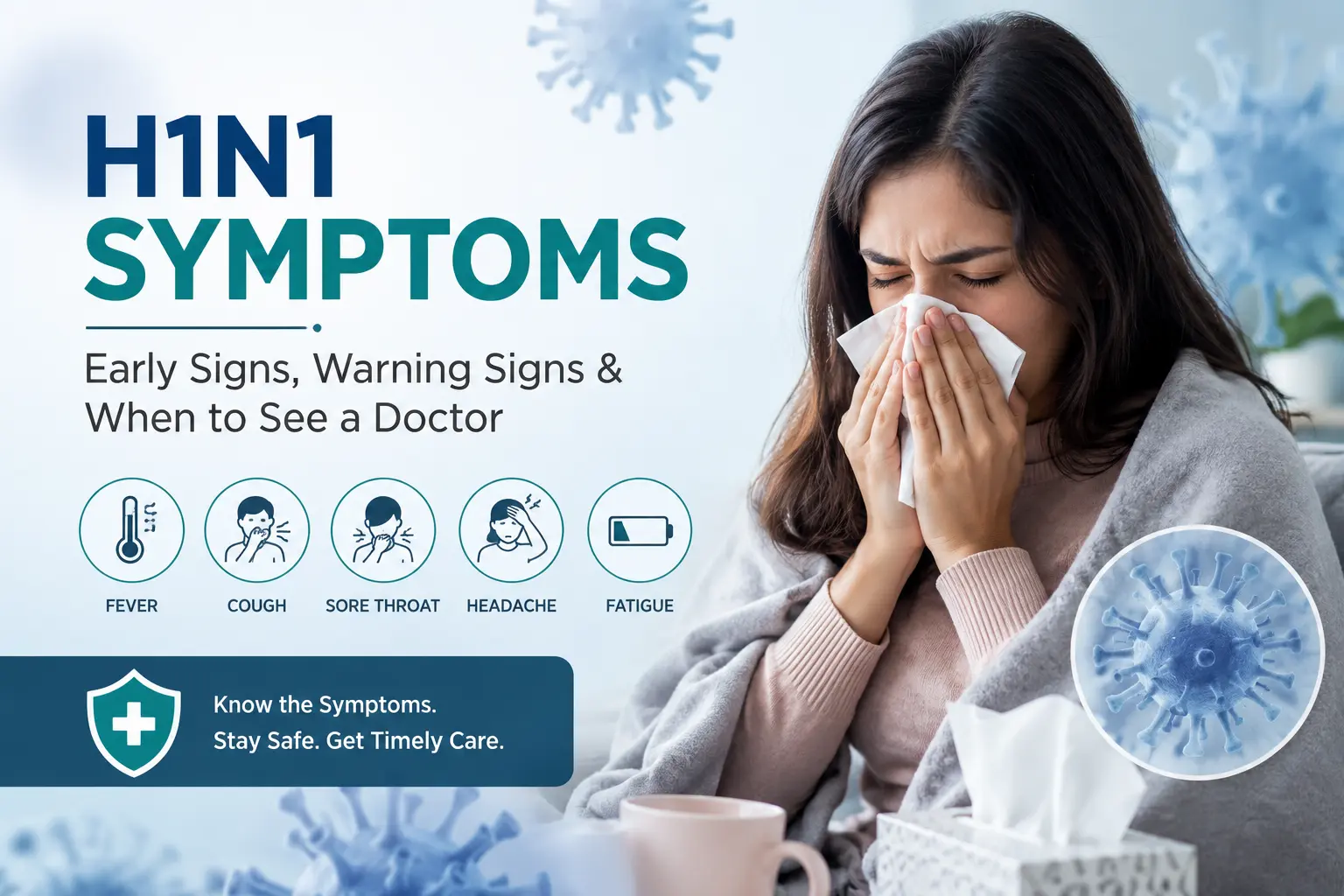
H1N1 influenza, commonly known as swine flu, is a type of influenza infection that can cause symptoms ranging from mild to severe. Because its early symptoms can resemble those of seasonal flu and other respiratory infections, knowing the common signs and warning symptoms can help you decide when medical advice may be necessary.
What Is H1N1 Influenza?
H1N1 is an influenza A virus that can infect the respiratory system. It spreads mainly through respiratory droplets and close contact with an infected person.
For many people, H1N1 causes a flu-like illness that improves with appropriate care and rest. However, some people may be at greater risk of complications and may need medical attention.
Common Early Symptoms of H1N1
H1N1 symptoms can develop relatively suddenly. Common symptoms include:
- Fever or feeling feverish
- Cough
- Sore throat
- Runny or blocked nose
- Headache
- Body aches or muscle pain
- Chills
- Tiredness or weakness
Some people may also experience nausea, vomiting, or diarrhea, particularly children.
Not everyone with H1N1 will experience all of these symptoms, and the severity can vary from person to person.
H1N1 Symptoms to Watch Closely
While many cases may be mild, certain symptoms can indicate that the infection is becoming more serious.
Pay particular attention to:
1. Difficulty Breathing
Shortness of breath, breathing difficulty, or unusual breathing should not be ignored. These symptoms can indicate a respiratory complication and require prompt medical evaluation.
2. Persistent or Worsening Fever
A fever that is persistent, unusually high, or returns after initially improving may require medical assessment, particularly when accompanied by worsening respiratory symptoms.
3. Severe Weakness or Dizziness
Extreme weakness, persistent dizziness, or difficulty staying awake can be warning signs that medical attention is needed.
4. Chest Pain or Pressure
Chest pain or pressure along with flu symptoms should be evaluated urgently.
5. Signs of Dehydration
Reduced urination, significant weakness, dizziness, or difficulty keeping fluids down can indicate dehydration.
H1N1 Symptoms in Children
Children may experience many of the same symptoms as adults, including fever, cough, sore throat, fatigue, and body aches. Some children may also develop vomiting or diarrhea.
Parents and caregivers should pay close attention to changes in breathing, hydration, alertness, and overall behavior.
Seek medical attention promptly if a child develops breathing difficulties, bluish or grayish skin, severe dehydration, unusual sleepiness, seizures, or symptoms that improve and then become significantly worse.
When Should You See a Doctor for H1N1?
You should consider contacting a healthcare professional if:
- Symptoms are severe or getting worse
- Fever or other symptoms persist or return
- You have difficulty breathing
- You experience chest pain or pressure
- You are unable to maintain adequate fluid intake
- You develop significant weakness or confusion
- Symptoms improve but then suddenly worsen
People who are at higher risk of influenza complications may also benefit from contacting a healthcare professional early when flu symptoms develop.
Who May Be at Higher Risk of Complications?
Certain groups have a greater risk of developing serious complications from influenza. These can include:
- Older adults
- Young children
- Pregnant people
- People with certain chronic medical conditions
- People with weakened immune systems
If you belong to a higher-risk group and develop flu-like symptoms, speak with a healthcare professional about whether evaluation or treatment is appropriate.
H1N1 or Common Flu: Are the Symptoms Different?
H1N1 symptoms can be very similar to those caused by other influenza viruses. Fever, cough, sore throat, fatigue, headaches, and body aches can occur with different types of flu.
Because symptoms overlap, you generally cannot confirm H1N1 simply by looking at symptoms. A healthcare professional may consider your symptoms, medical history, exposure, and whether testing is appropriate.
How Long Do H1N1 Symptoms Last?
The duration of influenza symptoms can vary depending on the individual and the severity of the infection. Many people gradually recover over several days, although tiredness and cough may continue for longer.
If symptoms are not improving, become more severe, or improve and then worsen again, medical evaluation is recommended.
How Can You Reduce the Risk of H1N1?
Good respiratory and hand hygiene can help reduce the spread of influenza viruses.
Helpful precautions include:
- Wash your hands regularly with soap and water.
- Avoid close contact with people who are sick when possible.
- Cover your mouth and nose when coughing or sneezing.
- Avoid touching your eyes, nose, and mouth with unwashed hands.
- Stay home when you are unwell where possible.
- Improve ventilation in indoor spaces.
- Follow current recommendations regarding influenza vaccination.
conclusion
H1N1 can cause symptoms similar to other types of influenza, including fever, cough, sore throat, body aches, headache, and fatigue. Most people may recover with appropriate care, but some infections can become serious.
Knowing the warning signs particularly difficulty breathing, chest pain, severe weakness, dehydration, confusion, or worsening symptoms—can help you seek medical attention at the right time.
If you or someone in your family develops severe or concerning flu-like symptoms, consult a qualified healthcare professional rather than relying solely on online information.
Medical Disclaimer: This article is intended for general educational purposes only and should not be considered a substitute for professional medical diagnosis, advice, or treatment. Symptoms and treatment needs can vary between individuals.