H1N1 influenza, commonly known as swine flu, is a contagious respiratory infection that can spread from person to person. While it may cause mild illness in many people, influenza can sometimes lead to serious complications.
The good news is that several simple measures can help reduce the risk of H1N1 infection and limit its spread. Vaccination, good hygiene, respiratory precautions, and staying home when sick all play an important role in prevention.
Can H1N1 Be Prevented?
There is no way to completely eliminate the risk of catching influenza, but you can significantly reduce your risk by following recommended preventive measures.
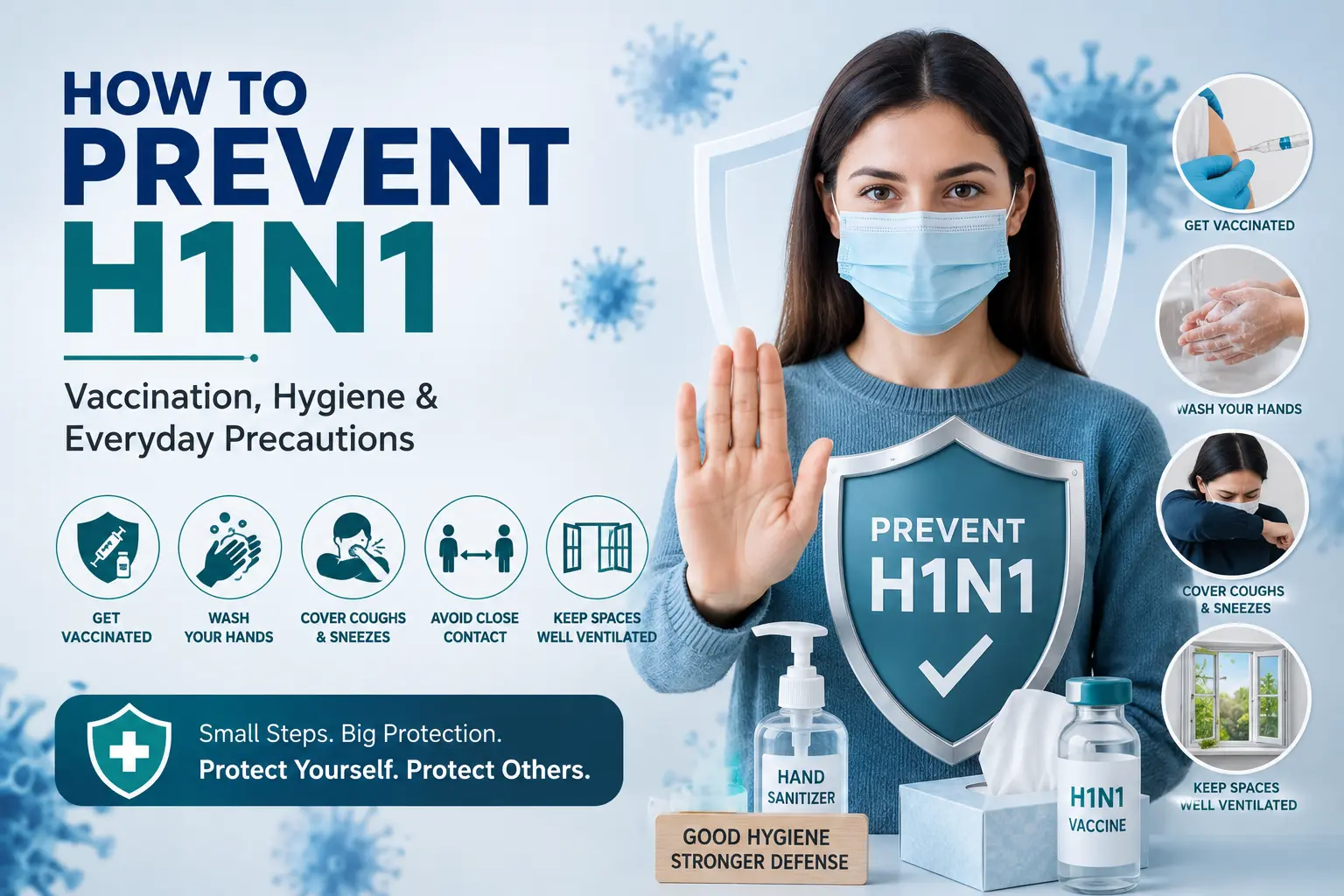
The most important steps include:
- Staying up to date with recommended influenza vaccination
- Washing your hands regularly
- Avoiding close contact with people who are sick
- Covering your mouth and nose when coughing or sneezing
- Avoiding touching your eyes, nose, and mouth with unwashed hands
- Improving ventilation in indoor spaces
- Staying home when you are unwell
- Following local public-health recommendations
1. Get the Recommended Influenza Vaccine
Influenza vaccination is one of the key ways to reduce the risk of influenza illness and its complications.
Seasonal influenza vaccines are updated periodically to provide protection against influenza viruses expected to circulate during a particular season. Depending on the vaccine and current recommendations, protection may include influenza A viruses.
Talk to a healthcare professional about whether influenza vaccination is appropriate for you, particularly if you are at increased risk of complications.
Vaccination does not guarantee that you will never get influenza, but it can help reduce the risk of severe illness.
2. Wash Your Hands Regularly
Influenza viruses can spread when contaminated hands come into contact with the nose, mouth, or eyes.
Wash your hands regularly with soap and water, particularly:
- Before eating or preparing food
- After coughing, sneezing, or blowing your nose
- After using the toilet
- After returning from public places
- After caring for someone who is sick
When soap and water are unavailable, an appropriate alcohol-based hand sanitizer can be used.
3. Avoid Touching Your Face
It is easy to touch your face without realizing it. Touching your eyes, nose, or mouth with unwashed hands can provide an opportunity for germs to enter the body.
Try to make regular hand hygiene a habit, especially after touching frequently used surfaces in public places.
4. Cover Coughs and Sneezes
If you need to cough or sneeze, cover your mouth and nose with a tissue or your elbow.
Used tissues should be disposed of promptly, followed by handwashing or hand sanitizing.
These simple habits can help reduce the spread of respiratory droplets to people around you.
5. Avoid Close Contact With People Who Are Sick
Influenza can spread through close contact with an infected person.
If someone around you has flu-like symptoms, try to maintain some distance where practical, particularly in crowded or poorly ventilated spaces.
If you are sick yourself, avoid unnecessary close contact with others until you have recovered and follow current public-health guidance.
6. Improve Indoor Ventilation
Respiratory viruses can spread more easily in crowded indoor environments, particularly when ventilation is poor.
Where practical:
- Open windows or doors to improve airflow.
- Use appropriate ventilation systems.
- Avoid spending long periods in crowded, poorly ventilated spaces.
- Consider outdoor settings when meeting others.
Better airflow can help reduce the concentration of respiratory particles indoors.
7. Stay Home When You Are Sick
If you develop symptoms of influenza, staying home when possible can help prevent transmission to coworkers, classmates, family members, and others.
Avoid unnecessary visits to crowded public places while you are sick.
If you need medical care, contact your healthcare provider and follow their instructions regarding visiting a clinic or hospital.
8. Keep Frequently Touched Surfaces Clean
Frequently touched surfaces can become contaminated with respiratory secretions.
Regularly clean commonly handled surfaces such as:
- Door handles
- Mobile phones
- Keyboards
- Tables
- Light switches
- Remote controls
Use appropriate cleaning products according to the manufacturer’s instructions.
9. Take Extra Precautions if You Are at Higher Risk
Some people have a higher risk of developing serious complications from influenza.
This can include:
- Older adults
- Young children
- Pregnant people
- People with certain chronic health conditions
- People with weakened immune systems
If you fall into a higher-risk group, speak with your healthcare professional about influenza prevention, vaccination, and what to do if you develop symptoms.
10. Do Not Rely on Antibiotics for Prevention
H1N1 is caused by an influenza virus, so antibiotics do not prevent or treat H1N1 influenza.
Antibiotics are used to treat certain bacterial infections. Taking them unnecessarily can contribute to antibiotic resistance and may cause unwanted side effects.
If you develop influenza symptoms, consult a healthcare professional rather than taking antibiotics on your own.
What Should You Do If Someone at Home Has H1N1?
If someone in your household has suspected or confirmed influenza, take reasonable precautions to reduce the chance of transmission.
Limit Close Contact
Avoid unnecessary face-to-face contact, particularly during the period when the person is experiencing significant symptoms.
Encourage Hand Hygiene
Everyone in the household should wash their hands regularly, especially after contact with the sick person’s belongings, tissues, or respiratory secretions.
Don’t Share Personal Items
Where practical, avoid sharing items such as towels, cups, or utensils with someone who is sick.
Improve Ventilation
Keep shared spaces adequately ventilated when possible.
Clean Commonly Touched Surfaces
Regularly clean surfaces that are frequently touched by multiple household members.
Can a Mask Help Prevent H1N1?
A well-fitting mask can provide an additional layer of protection against respiratory infections, particularly in certain crowded or high-risk settings.
The benefit can depend on factors such as the type and fit of the mask, how consistently it is worn, and the level of respiratory virus circulation.
Follow current recommendations from healthcare professionals and public-health authorities regarding mask use in your area.
H1N1 Prevention: What Matters Most?
You don’t need to rely on a single precaution. Prevention works best when several healthy habits are combined.
A practical approach is:
Vaccination + Hand Hygiene + Respiratory Etiquette + Ventilation + Staying Home When Sick
These measures can help reduce the likelihood of infection and limit the spread of influenza within households, workplaces, schools, and communities.
Conclusion
Preventing H1N1 involves more than one step. Recommended influenza vaccination, regular handwashing, good respiratory hygiene, adequate ventilation, avoiding close contact when sick, and staying home during illness can all help reduce the spread of influenza.
If you develop flu-like symptoms especially if you are at higher risk of complications contact a healthcare professional for appropriate advice.
Prevention is a shared responsibility. Small everyday habits can make a meaningful difference in protecting yourself, your family, and your community.
Medical Disclaimer: This article is intended for general educational purposes only and should not be considered a substitute for professional medical advice, diagnosis, or treatment. Vaccination and other preventive measures should be discussed with a qualified healthcare professional based on your individual circumstances.
Frequently Asked Questions
Is the H1N1 vaccine different from the flu vaccine?
H1N1 is an influenza A virus. Seasonal influenza vaccines are formulated to protect against selected influenza strains expected to circulate during a particular season. Ask a healthcare professional about the vaccine recommended for your current situation.
Can I get H1N1 even after vaccination?
Yes. Influenza vaccination does not provide 100% protection against infection. However, vaccination can reduce the risk of influenza illness and may reduce the risk of severe outcomes.
How can I prevent H1N1 from spreading to my family?
Good hand hygiene, covering coughs and sneezes, improving ventilation, avoiding unnecessary close contact, cleaning frequently touched surfaces, and staying home when sick can all help reduce transmission.
Does washing hands really help prevent H1N1?
Yes. Regular handwashing is an important general infection-control measure and can reduce the chance of transferring respiratory viruses from contaminated hands to the eyes, nose, or mouth.
Should I take antibiotics to prevent H1N1?
No. Antibiotics do not work against influenza viruses and should not be taken to prevent H1N1 unless specifically prescribed for a bacterial infection.