
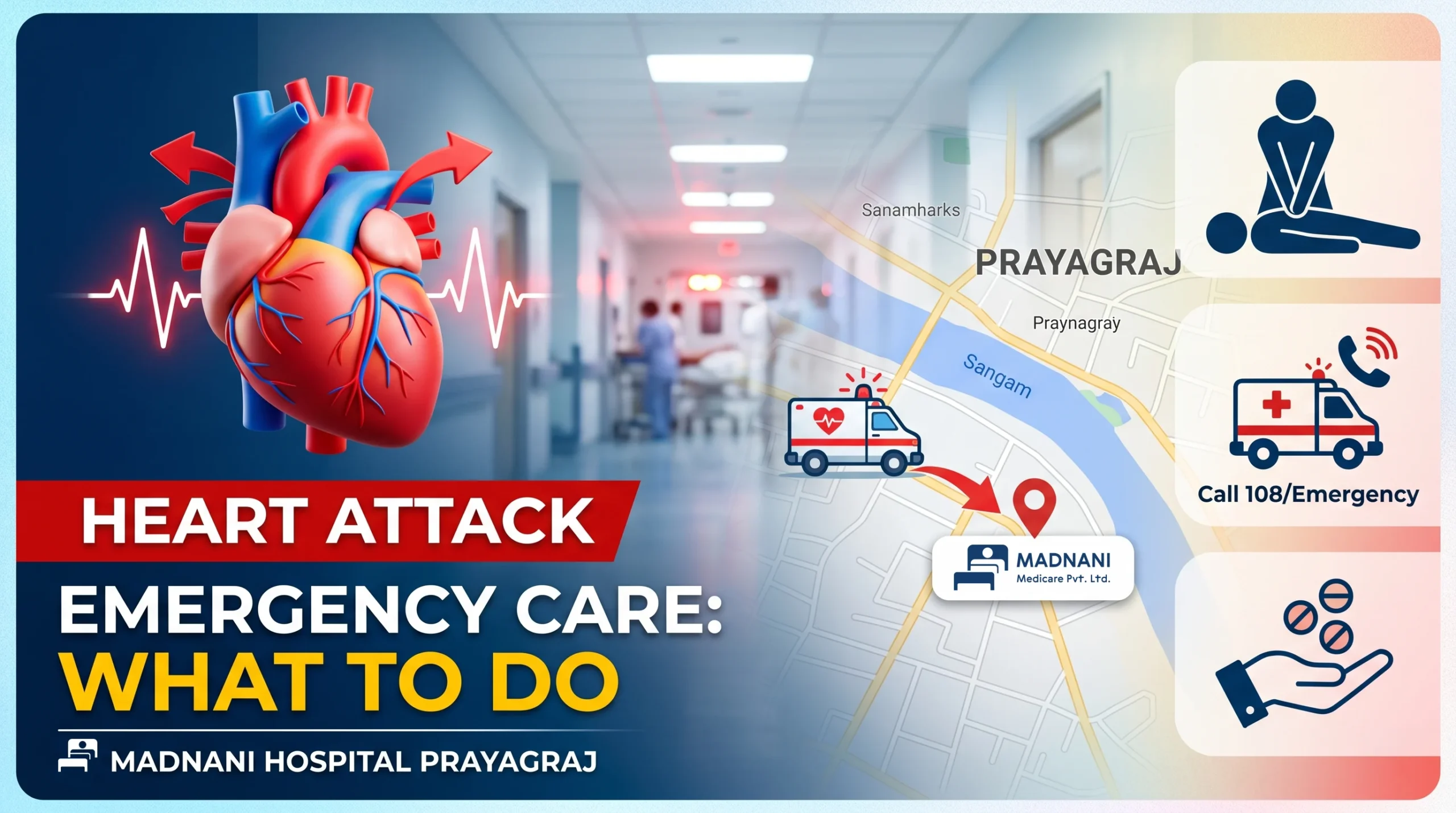
Heart attacks are no longer limited to older age today, even people in their 30s and 40s are at risk due to stress, unhealthy lifestyle, and medical conditions. Despite this growing concern, many people still don’t know how to react during such an emergency, which can lead to dangerous delays. Knowing the right steps and acting quickly can make a life-saving difference, as every minute counts in a heart attack. This is why having access to a reliable healthcare facility like Madnani Hospital becomes extremely important, where timely medical care and expert support can help manage the situation effectively.
What is a Heart Attack?
A heart attack occurs when the flow of blood to a part of the heart is blocked, usually due to a buildup of fat, cholesterol, or a blood clot in the arteries. Because the heart muscle depends on a constant supply of oxygen-rich blood, this blockage can quickly start damaging the heart tissue. In most cases, a heart attack happens suddenly, but it may also begin with mild discomfort or warning signs that are often ignored.
Since the heart is a vital organ, any delay in treatment can increase the risk of serious complications or even become life-threatening. That’s why a heart attack is considered a medical emergency and requires immediate attention. Recognizing the symptoms early and acting quickly can help reduce damage to the heart and improve the chances of recovery.
Recognizing the symptoms early is very important because it helps you act quickly in an emergency. A heart attack can show different signs in different people, but some common warning symptoms should never be ignored.
- Chest pain or pressure – a feeling of tightness, heaviness, or squeezing in the chest
- Pain in arm, jaw, or back – discomfort may spread, especially to the left arm
- Breathlessness – difficulty in breathing even while resting
- Sweating – sudden cold sweats without any physical activity
- Nausea – feeling uneasy in the stomach or like vomiting
These symptoms are strong warning signs, and if you notice them, it’s important to immediately understand what to do in case of a heart attack and seek urgent medical help.
What to Do in Case of a Heart Attack ?
Acting quickly during a heart attack can save a life. The first and most important step is to call emergency help immediately without waiting for the symptoms to go away. Make the person sit comfortably and try to keep them calm, as panic can worsen the situation. If the person is conscious and not allergic, giving an aspirin may help reduce blood clotting. Loosen any tight clothing to make breathing easier and keep monitoring their condition closely. Avoid giving food or drinks during this time. If the person becomes unconscious or stops breathing, start CPR right away. Most importantly, ensure they are taken to a nearby hospital like Madnani Hospital as quickly as possible, because timely medical care is critical. Knowing exactly what to do in case of a heart attack and acting without delay can make a life-saving difference.
What Not to Do During a Heart Attack?
- Don’t ignore symptoms – even mild chest discomfort can be serious
- Don’t delay – waiting can increase risk and damage to the heart
- Don’t panic – stay as calm as possible to manage the situation better
- Don’t self-drive in serious condition – it can be dangerous; call for help instead
Even small mistakes during a heart attack can lead to serious complications. Ignoring warning signs or delaying help can reduce the chances of survival.
Prevention Tips
- Eat a healthy diet – include fruits, vegetables, whole grains, and reduce oily/fatty foods
- Exercise regularly – at least 30 minutes daily to keep the heart active
- Go for regular checkups – monitor blood pressure, cholesterol, and sugar levels
- Avoid smoking – it greatly increases the risk of heart blockages
- Maintain a healthy weight – reduces strain on the heart
- Manage stress – practice relaxation or mindfulness techniques
Who is at Risk?
Heart attacks can affect anyone, but certain people are at a higher risk due to their health and lifestyle. Individuals above the age of 40 are more vulnerable, especially if they have conditions like high blood pressure, diabetes, or high cholesterol. People who smoke, lead a sedentary lifestyle, or are overweight also face a greater risk. High levels of stress, unhealthy eating habits, and a family history of heart disease further increase the chances. In recent years, even younger individuals are becoming prone due to poor lifestyle choices. Understanding your risk factors and staying aware of what to do in case of a heart attack can help in early action and prevention.
Emergency Cardiac Care At Madnani Hospital, Prayagraj
For anyone facing a heart emergency, timely and reliable medical care is crucial. Madnani Hospital, established in 1990, has built strong trust among patients by providing dependable healthcare services over the years. The hospital is supported by experienced doctors and a trained medical team that ensures quick emergency response, which is essential in critical situations like a heart attack. Patients benefit from prompt diagnosis and immediate treatment, all under one roof. In terms of cost, the hospital maintains a transparent and affordable approach. Doctor consultation typically starts from around ₹500–₹1000, while emergency treatment costs may vary depending on the patient’s condition and level of care required. Additional tests such as ECG and blood investigations are charged separately, but everything is clearly explained in advance so patients and families can make informed decisions without confusion.
Conclusion
A heart attack is a serious medical emergency that requires immediate action. Ignoring warning signs or delaying treatment can lead to severe complications. Being aware of the symptoms and knowing what to do in case of a heart attack can truly save a life. If you or your loved ones experience any signs, do not take risks seek medical help without delay. Visit Madnani Hospital for quick and reliable care, or book a consultation with experienced doctors to ensure timely treatment and better heart health.
