Diabetes is one of the most common chronic diseases worldwide, but many people don’t realize that there are different types of diabetes. The two main forms—Type 1 diabetes and Type 2 diabetes—share one common feature: high blood sugar levels. However, they differ significantly in their causes, symptoms, treatment, and long-term management.
Understanding the difference between Type 1 vs Type 2 diabetes is essential for early diagnosis and effective treatment. In this guide, we’ll explain everything you need to know about these two conditions.
What Is Diabetes?
Diabetes is a condition in which the body cannot properly regulate blood glucose (blood sugar). This occurs because the body either:
- Produces little or no insulin, or
- Cannot use insulin effectively.
Insulin is a hormone produced by the pancreas that helps glucose move from the bloodstream into the body’s cells, where it is used for energy.
Without enough insulin or when insulin doesn’t work properly—blood sugar levels rise, leading to diabetes.
What Is Type 1 Diabetes?
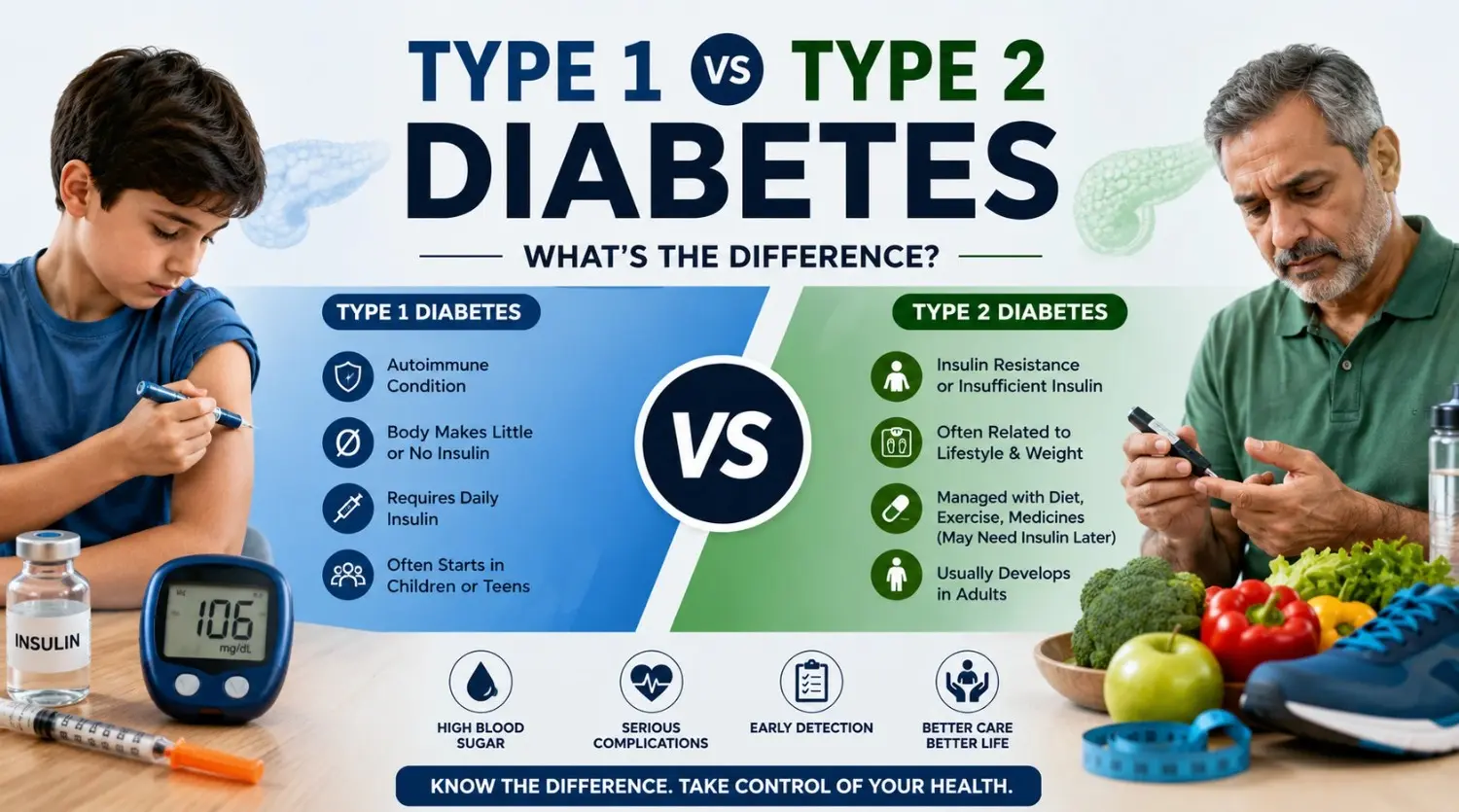
Type 1 diabetes is an autoimmune disease in which the immune system mistakenly attacks and destroys the insulin-producing beta cells in the pancreas.
As a result, the body produces little or no insulin, making lifelong insulin therapy necessary.
Common Facts
- Usually diagnosed in children, teenagers, or young adults
- Can occur at any age
- Cannot currently be prevented
- Requires daily insulin injections or an insulin pump
What Is Type 2 Diabetes?
Type 2 diabetes occurs when the body becomes resistant to insulin or doesn’t produce enough insulin to keep blood sugar levels within a healthy range.
It develops gradually and is strongly linked to lifestyle factors, although genetics also play an important role.
Common Facts
- Most common type of diabetes
- Usually develops after age 40 but is increasingly seen in younger adults and children
- Often associated with obesity and physical inactivity
- Can often be managed with lifestyle changes and medication
Symptoms of Type 1 Diabetes
Symptoms usually appear suddenly and may become severe within days or weeks.
Common symptoms include:
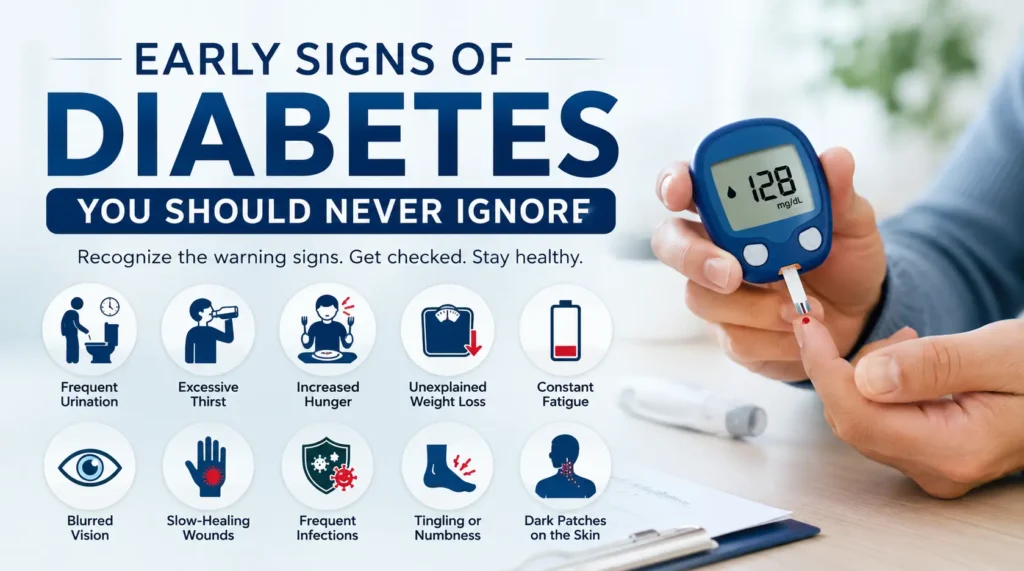
- Frequent urination
- Excessive thirst
- Increased hunger
- Rapid, unexplained weight loss
- Extreme fatigue
- Blurred vision
- Fruity-smelling breath (in severe cases)
- Nausea or vomiting
Type 1 diabetes requires immediate medical attention because untreated cases can lead to diabetic ketoacidosis (DKA), a life-threatening condition.
Symptoms of Type 2 Diabetes
Type 2 diabetes develops slowly, and many people have no symptoms in the early stages.
Common symptoms include:
- Frequent urination
- Increased thirst
- Fatigue
- Blurred vision
- Slow-healing wounds
- Frequent infections
- Tingling or numbness in the hands and feet
- Dark patches of skin around the neck or underarms (Acanthosis Nigricans)
What Causes Type 1 Diabetes?
The exact cause is not fully understood, but researchers believe it results from a combination of:
- Genetic factors
- Autoimmune reactions
- Environmental triggers such as viral infections
Lifestyle choices do not cause Type 1 diabetes.
What Causes Type 2 Diabetes?
Several factors increase the risk of developing Type 2 diabetes, including:
- Obesity
- Physical inactivity
- Family history
- High blood pressure
- High cholesterol
- Unhealthy diet
- Increasing age
- Polycystic Ovary Syndrome (PCOS)
Unlike Type 1 diabetes, lifestyle plays a major role in the development of Type 2 diabetes.
Treatment for Type 1 Diabetes
People with Type 1 diabetes need insulin every day because their bodies can no longer produce it.
Treatment usually includes:
- Insulin injections or an insulin pump
- Continuous glucose monitoring (CGM) or regular blood sugar testing
- Healthy eating
- Regular exercise
- Diabetes education and routine medical follow-up
Treatment for Type 2 Diabetes
Treatment depends on the severity of the condition.
It may include:
- Healthy diet
- Weight management
- Regular physical activity
- Oral diabetes medications
- Injectable medications such as GLP-1 receptor agonists
- Insulin therapy (in some cases)
Many people with early Type 2 diabetes can achieve good blood sugar control through lifestyle modifications.
When Should You See a Doctor?
Seek medical advice if you experience:
- Frequent urination
- Excessive thirst
- Unexplained weight loss
- Constant fatigue
- Blurred vision
- Slow-healing wounds
- Recurrent infections
- Persistent numbness or tingling in your hands or feet
Early diagnosis and treatment can help prevent long-term health problems.
Conclusion
Although both Type 1 and Type 2 diabetes result in high blood sugar levels, they differ in their underlying causes, treatment approaches, and prevention strategies. Type 1 diabetes is an autoimmune condition that requires lifelong insulin therapy, while Type 2 diabetes is often linked to insulin resistance and lifestyle factors and can frequently be managed with healthy habits and medication.
Recognizing the symptoms early and seeking timely medical care can help prevent complications and improve quality of life. If you suspect you may have diabetes, consult a qualified healthcare professional for evaluation and appropriate treatment.
Which is more common, Type 1 or Type 2 diabetes?
Type 2 diabetes accounts for approximately 90–95% of all diabetes cases, making it the most common form.
Can Type 2 diabetes turn into Type 1 diabetes?
No. They are different conditions with different causes. However, some people with Type 2 diabetes may eventually require insulin if their pancreas produces less insulin over time.
Is insulin required for both types?
Everyone with Type 1 diabetes requires insulin. People with Type 2 diabetes may manage their condition with lifestyle changes and medications, although some eventually need insulin therapy.
Can children develop Type 2 diabetes?
Yes. Due to increasing rates of childhood obesity, Type 2 diabetes is becoming more common in children and adolescents.