Diabetes has become one of the most common lifestyle-related health conditions today, affecting millions of people worldwide. Along with its rising numbers, there is also growing curiosity around one important question can diabetes actually be reversed? Many people misunderstand the term “diabetes reversal,” often assuming it means a permanent cure. In reality, certain cases, especially Type 2 diabetes, may be effectively managed or brought into remission through healthy lifestyle changes, weight management, regular monitoring, and timely medical care. However, professional guidance remains extremely important to ensure safe and effective diabetes management. Early intervention can make a significant difference in controlling blood sugar levels and reducing future health complications. At Madnani Hospital, experienced healthcare professionals provide comprehensive diabetes care and personalized support. Understanding the facts early can help people make healthier and more informed decisions.
Is Every Type of Diabetes Reversible?
Not all types of diabetes can be reversed, which is why understanding the difference between Type 1 and Type 2 diabetes is important. Type 1 diabetes is an autoimmune condition in which the body attacks the insulin-producing cells of the pancreas. People with Type 1 diabetes usually require lifelong insulin support, and currently, there is no permanent reversal for this condition.
Type 2 diabetes, however, is more commonly linked to lifestyle factors such as obesity, unhealthy eating habits, lack of exercise, and insulin resistance. In some cases, people with Type 2 diabetes may achieve normal blood sugar levels through weight management, healthy food choices, regular physical activity, and proper medical guidance. This is often referred to as diabetes remission rather than a complete cure.
It is important to understand that remission does not mean diabetes has disappeared permanently. Continuous monitoring, healthy habits, and regular medical care are still necessary to maintain long-term health and prevent complications.
Small Lifestyle Changes, Big Health Benefits
Managing Type 2 diabetes often begins with simple but consistent lifestyle changes. While medical treatment plays an important role, daily habits can greatly influence blood sugar control and overall health. In some cases, healthier routines may even help people achieve diabetes remission under proper medical supervision. Small daily choices often create the biggest long-term health changes.
Some important lifestyle habits that can help include:
- Healthy Eating Habits:
Choosing balanced meals with fresh vegetables, fruits, whole grains, and protein-rich foods can help maintain stable blood sugar levels. - Weight Management:
Maintaining a healthy body weight may improve insulin sensitivity and reduce diabetes-related complications. - Regular Exercise:
Physical activity such as walking, cycling, yoga, or light workouts helps the body use insulin more effectively and improves energy levels. - Better Sleep Routine:
Poor sleep can affect blood sugar balance. Getting adequate rest every night supports overall metabolic health. - Stress Management:
Chronic stress may increase blood sugar levels. Relaxation techniques, meditation, and proper rest can help manage stress better. - Routine Blood Sugar Monitoring:
Regular health checkups and sugar monitoring help track progress and detect changes early. - Limiting Sugary & Processed Foods:
Reducing sugary drinks, processed snacks, and unhealthy fast food helps maintain healthier glucose levels.
Consistency, patience, and professional medical guidance are key to long-term diabetes management and healthier living.
Symptoms That Need Medical Attention
Diabetes symptoms often appear gradually and may seem harmless in the beginning. However, ignoring these warning signs for too long can increase the risk of serious health complications. Paying attention to early changes in your body can help with timely diagnosis and better diabetes management.
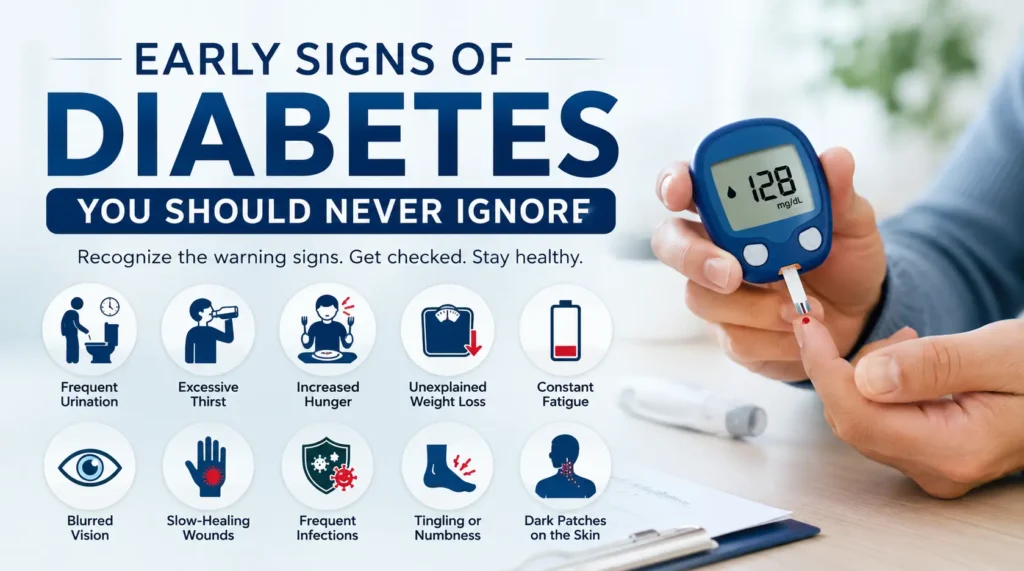
- Frequent Urination – High blood sugar forces the kidneys to work harder, leading to frequent bathroom visits.
- Excessive Thirst – Constant urination can leave the body dehydrated and unusually thirsty.
- Fatigue – The body may feel tired or weak when glucose is not being used properly for energy.
- Blurred Vision – Changes in blood sugar levels can affect eyesight and cause blurry vision.
- Slow Wound Healing – Cuts, bruises, or infections may take longer than usual to heal.
- Tingling in Hands or Feet – Numbness or tingling sensations can be an early sign of nerve-related complications.
Why Proper Medical Guidance Matters in Diabetes Care
Managing diabetes is not just about reducing sugar intake or following random advice from the internet. Many online myths, quick remedies, and crash diets may temporarily affect blood sugar levels but can also harm overall health if followed without proper medical supervision. Every person’s body responds differently, which is why personalized treatment and regular monitoring are extremely important for safe and effective diabetes management.
Routine health checkups help track blood sugar levels, identify complications early, and improve long-term health outcomes. At Madnani Hospital, experienced healthcare professionals provide comprehensive diabetes screening, regular monitoring, lifestyle guidance, and long-term care support to help patients manage diabetes more effectively and maintain a healthier quality of life.
Early Diabetes Control Can Improve Long-Term Health
Taking control of diabetes at an early stage can greatly improve long-term health and reduce the risk of serious complications in the future. When blood sugar levels are managed properly through healthy lifestyle habits, regular monitoring, and timely medical care, the body functions more efficiently and overall well-being improves. Early diabetes management not only helps control symptoms but also supports a healthier and more active lifestyle over time.
Effective diabetes control can help protect:
- Heart Health – Helping lower the risk of heart-related conditions and high blood pressure
- Kidney Health – Reducing the chances of kidney damage caused by uncontrolled blood sugar
- Vision Health – Supporting healthier eyesight and lowering the risk of diabetes-related eye problems
- Nerve Health – Preventing numbness, tingling, and other nerve-related complications
Consistent treatment, healthy daily habits, and regular medical checkups play an important role in maintaining better long-term health with diabetes.
Diabetes Management Starts with Awareness
Diabetes management begins with understanding the condition, recognizing early symptoms, and making healthier lifestyle choices. While Type 2 diabetes may be managed or brought into remission in some cases, results often depend on factors such as overall health, lifestyle habits, weight management, and timely medical care. Early diagnosis and consistent treatment play a major role in preventing long-term complications and improving quality of life. Simple habits like balanced nutrition, regular exercise, proper sleep, and routine monitoring can make a significant difference over time. At Madnani Hospital, experienced healthcare professionals provide comprehensive diabetes care, regular monitoring, personalized guidance, and long-term support for healthier living and better diabetes management.
Take the First Step Toward Better Diabetes Control
If you are experiencing symptoms of diabetes or want professional guidance for diabetes management, consult the specialists at Madnani Hospital for expert care and personalized support Call and Book Your Consultation Today.